The flesh of the sun
Gold was held to be the incorruptible flesh of the sun god Ra. Temple bakers are said to have worked powdered gold into sacred bread for the pharaohs' rites — a way of taking its vitality into the body.
- Powdered gold in temple bread
- The ascension rites of the pharaohs
- Gold as the sign of the sun
Swarna bhasma and varak
The Charaka Samhita describes swarna bhasma — calcined gold — as a restorative for memory and vitality. Centuries later the halwais of the Mughal court beat gold into gossamer varak and laid it over celebratory sweets: the height of mehmaan-nawazi, the honouring of a guest.
- Swarna bhasma in Ayurvedic practice
- Hand-beaten varak on festive sweets
- Mehmaan-nawazi — honouring guests with gold
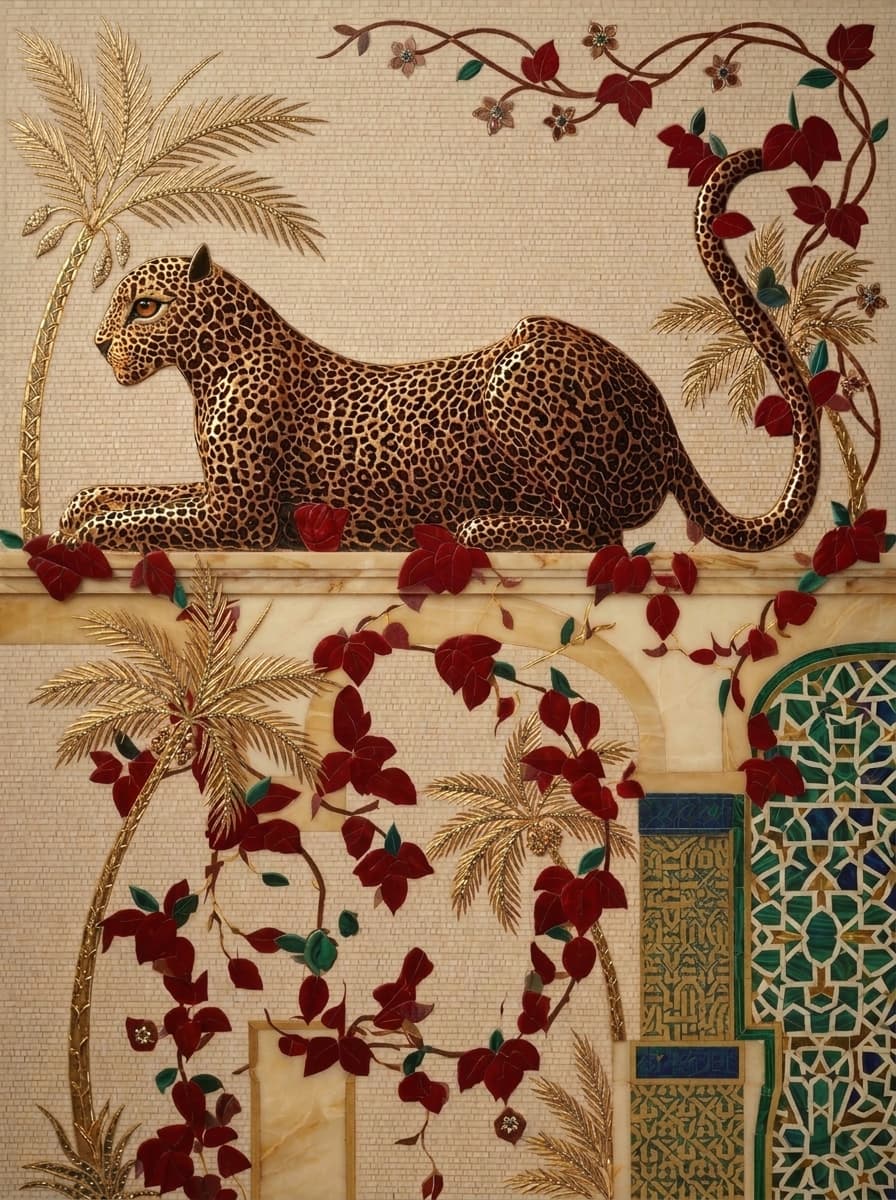
The Sohnpatra guardian, in the manner of a Mughal miniature The gilded banquet
At ducal tables in Venice, Milan and Florence, cooks covered roast birds, marzipan and spiced wine in beaten leaf — oro battuto. The display grew lavish enough that the Venetian Senate passed sumptuary laws to rein it in.
- Roast courses sheathed in leaf
- Gilded marzipan and spiced wine
- Sumptuary laws against excess
The golden elixir
Taoist alchemists sought jin dan, the golden elixir, believing the body could take on gold's resistance to decay. In Kanazawa, artisans perfected entsuke haku, leaf fine enough to float on a bowl of matcha or on the sake poured at New Year.
- Jin dan, the Taoist elixir
- Kanazawa leaf on ceremonial matcha
- Gold-flake sake at New Year
Certified, and at the table again
Science has since confirmed what tradition assumed: 24-karat gold is inert and safe to eat, approved as food additive E175. Sohnpatra brings the custom back to the table — on a jumbo Medjool date, sheathed by hand.
- Certified 24-karat gold, E175
- Jumbo Medjool, sheathed by hand
- Gold, given as a gift again
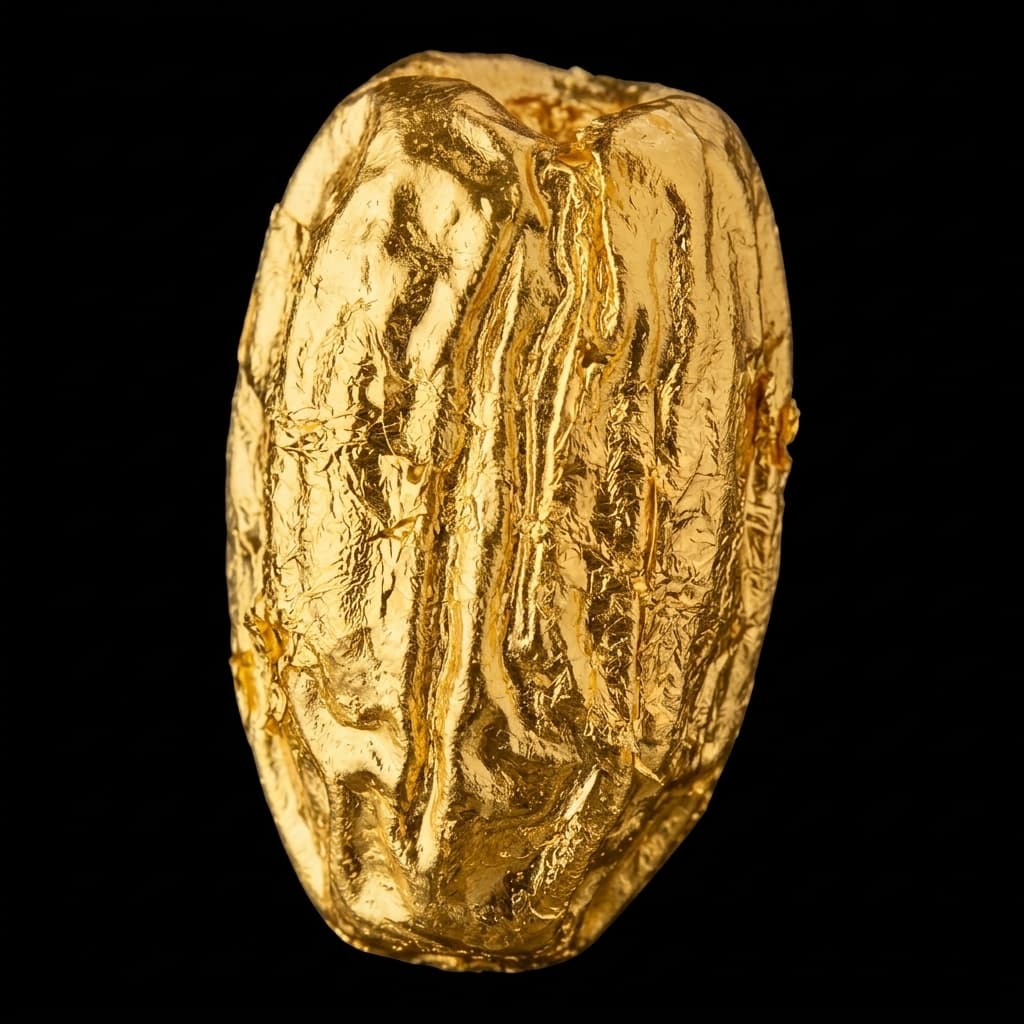
A Sohnpatra date in 24-karat leaf
From the date to the jewel case
Five considered stages, from Saudi Arabian palms to signature fillings, gold leaf and the finished jewel case.